
Need Help?
Please Feel Free To Contact Us. We Will Get Back To You With 1-2 Business Days.
+91 - 987 3324 300juslexlawyer@gmail.com
Quick Contact
Cheque Bounce Lawyer in India: Section 138 NI Act Cases
A cheque bounce lawyer in India handles cases under Section 138 of the Negotiable Instruments Act, 1881, including legal notice, complaint filing, court proceedings, settlement, and defence. This guide explains the cheque bounce case procedure, legal notice time limit, punishment, settlement, and other key aspects of Section 138 NI Act cases in India.
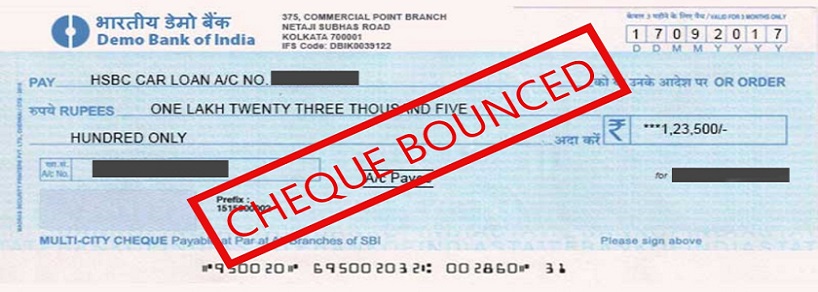
Key Terms in a Section 138 Cheque Bounce Case
- Dishonour of cheque: the bank's refusal to honour/pay a cheque presented for payment, usually marked with a return memo citing the reason (e.g., "funds insufficient," "signature mismatch").
- NI Act (Negotiable Instruments Act, 1881): the central law governing cheques, promissory notes, and bills of exchange in India; Sections 138 -142 specifically deal with cheque bounce offences.
- Compounding of offence: A settlement mechanism under Section 147 of the NI Act through which the parties can compound the offence, subject to the applicable court process. Compounding may be permitted at different stages of the proceedings, including after conviction.
- Demand or Legal Notice: a mandatory written notice the payee must send to the drawer within 30 days of the dishonour, demanding payment within 15 days before a criminal complaint can be filed.
How a Cheque Bounce Case Proceeds: Step-by-Step
- Cheque dishonour : The bank returns the cheque unpaid and issues a return memo stating the reason.
- Legal notice : The payee's lawyer sends a written demand notice to the drawer within 30 days of receiving the return memo, demanding payment within 15 days.
- Waiting period : If the drawer doesn't pay within 15 days of receiving the notice, a cause of action to file a criminal complaint arises.
- Filing the complaint : The complaint under Section 138 must be filed in the jurisdictional Magistrate's court within 30 days of the cause of action arising (i.e., after the 15-day window lapses).
- Summons and appearance : The court issues summons to the accused; the case proceeds to appearance, evidence, and cross-examination.
- Trial or settlement : Parties may settle and compound the offence at any stage, or the case proceeds to trial and final judgment.
- Judgment and execution : On conviction, the court awards compensation/fine and, if unpaid, that amount is recoverable as a fine in default, with the option of imprisonment.
Cheque Bounce Case Time Limit Under Section 138
- Legal notice must be sent within 30 days of the dishonour date.
- The drawer gets 15 days from receiving the notice to pay.
- The complaint must be filed within 30 days after the 15-day period expires (courts may condone delay for sufficient cause).
- Filing outside this window without valid justification may expose the complaint to a limitation objection, although the court may condone a delay where the statutory requirements for condonation are satisfied. Timely legal advice is therefore important.
Why Hire a Cheque Bounce Lawyer in India?
Section 138 cases involve strict statutory timelines, technical defences (such as signature disputes or debt-liability challenges), and procedural requirements that vary across evidentiary and summary trial formats. A lawyer familiar with cheque bounce litigation helps with:
- Drafting a legally sound demand notice that protects the limitation period
- Filing complaints correctly to avoid dismissal on technical grounds
- Negotiating settlement and compounding to close matters faster
- Defending drawers against wrongful or defective complaints
Advocate Ravinder Tyagi of Tyagi Associates represents both complainants and accused in cheque bounce matters before Magistrate courts, handling cases across India with a focus on the Delhi NCR region. [15 years] of criminal and civil litigation experience, with a practice covering NI Act matters, recovery of money, and related criminal law.
FAQs
1. How do I file a cheque bounce case under Section 138?
To file a cheque bounce case under Section 138, first send a legal notice to the drawer within 30 days of the cheque dishonour, demanding payment within 15 days. If the amount remains unpaid after this 15-day period, a complaint can be filed before the jurisdictional Magistrate's court within the limitation period prescribed under the NI Act, along with the cheque, bank return memo, and proof of notice.
2. When should a cheque bounce legal notice be sent?
A cheque bounce legal notice should be sent within 30 days of receiving the bank's return memo confirming dishonour. This notice is a mandatory step under Section 138 it formally demands payment of the cheque amount within 15 days and must be issued before any criminal complaint can be filed, so timing it correctly protects the right to proceed further.
3. What happens after a Section 138 notice is not paid?
If the drawer does not pay the cheque amount within 15 days of receiving the legal notice, the payee's right to file a criminal complaint under Section 138 arises. The complaint must then be filed within 30 days of this cause of action, after which the court can issue summons and initiate proceedings against the accused.
4. Where is a cheque bounce case filed?
A cheque bounce case is filed before the court having territorial jurisdiction as determined under Section 138 read with Section 142 of the NI Act, which generally corresponds to where the cheque was presented for collection or the branch where the payee's account is maintained. Jurisdiction can be a contested issue, so it's worth confirming before filing.
5. Can the accused defend a cheque bounce case?
Yes, an accused in a cheque bounce case has the right to defend themselves and can raise legally available defences depending on the facts such as disputing the existence of a legally enforceable debt, challenging the signature, or pointing to procedural lapses in the notice or complaint. Outcomes depend entirely on the evidence and circumstances of each case.
6. Can a cheque bounce case be withdrawn after settlement?
Yes, a Section 138 offence is compoundable under Section 147 of the NI Act, meaning the complainant and accused can settle the matter and have the case withdrawn often after the outstanding payment is made. Compounding is possible at various stages of the proceedings, including after conviction, subject to the court's process and, at times, its discretion.
7. What documents are required for a cheque bounce case?
A cheque bounce case typically requires the original dishonoured cheque, the bank's return memo stating the reason for dishonour, a copy of the legal notice sent to the drawer along with proof of delivery (postal receipt/courier tracking), and supporting documents establishing the underlying debt or liability, such as an agreement, invoice, or acknowledgment.
8. How much does a cheque bounce lawyer charge?
Cheque bounce lawyer fees in India are not fixed and vary based on factors like the lawyer's experience, the city and court involved, the complexity of the matter, the number of hearings required, and whether the case is resolved through early settlement or proceeds to a full trial. It's best to discuss fee structure directly during a consultation.
Cheque Bounce Lawyer - We are providing Legal Consultation for Cheque Bounce in various Family Courts in Delhi, Faridabad, Gurgaon, Palwal, Noida, Greater Noida, Ghaziabad, Meerut, Sonipat & Panipat.
Best Cheque Bounce Lawyer in Delhi Best Cheque Bounce Lawyer in Faridabad Best Cheque Bounce Lawyer in Greater Noida Best Cheque Bounce Lawyer in Noida Best Cheque Bounce Lawyer In Gurgaon