
Need Help?
Please Feel Free To Contact Us. We Will Get Back To You With 1-2 Business Days.
+91 - 987 3324 300juslexlawyer@gmail.com
Quick Contact
Best Lawyer for Cheque Bounce Cases in Lajpat Nagar
Tyagi Associates Lawyer is the best law firm and provides legal advice for Cheque Bounce Cases in Lajpat Nagar. We observe the highest level of professional ethics with an excellent, responsive and timely legal service to our clients. Our motto has always been timely service, best quality and optimum cost. We provide pragmatic, solution-oriented and technically feasible advice to our clients.
Cases of Cheque Bounce Cases in Lajpat Nagar are not uncommon these days. In most of the transactions, be it repayment of a loan or payment of fees for commercial enterprise purposes, payments are made by cheque. Those cheques bearing large amounts sometimes remain unpaid and are returned by the bank on which they are drawn. For such cases consult, the Best Cheque Bounce Cases Lawyer in Lajpat Nagar. Cheque bounce that comes below Section 138 Negotiable Instruments Act, which is not precisely a criminal offence, but it is termed as a quasi-civil case and it is filed at the Magistrate Court, irrespective of the amount mentioned in the cheque. In case of a cheque bounce, you would need a banking lawyer to serve the legal notice to the other party.
Tyagi Associates Lawyer has been active and handling cases severally with a result-oriented approach, each skilled and ethically has currently non-heritable wonderful professional expertise in providing legal practice and advisory services. Cheque Bounce Case Lawyer in Lajpat Nagar provides services in numerous fields of arbitration matters, tribunal matters, recovery matters, property matters and drafting and vetting of assorted agreements and documents.
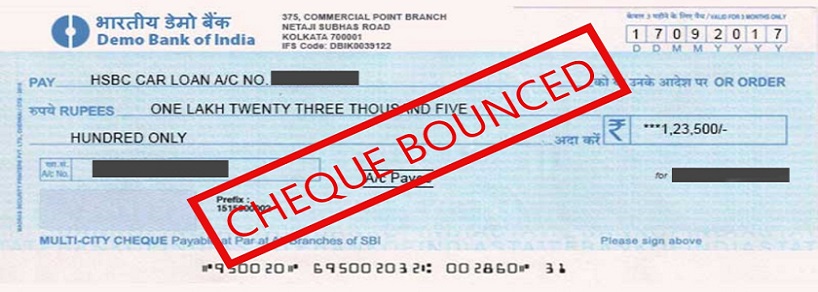
Process of cheque bounce case:-
- * If a cheque is bounced, a notice should be sent to the opposite party within thirty days from the date of the memo related to the bounced cheque, which is received from the Bank.
- * The demand notice by the holder of the cheque should claim the amount for that the cheque has been bounced, providing fifteen days to pay the claimed amount.
- * The opposite party has fifteen days from the receipt of the notice to settle the matter, and no reason for action arises until the termination of these fifteen days or if the amount is paid within the specified period.
- * After the completion of said 15 days, if the opposite party doesn't settle the matter or ignores the demand notice, then the holder of the cheque may file a criminal complaint before the appropriate court within 30 days from the date of the termination of said 15 days.
- * The Complainant has to file within the jurisdiction of the court where he has his home branch of his bank.
- * If the said case is filed after the expiry of the mandatory 30-day period, then in that case, the complainant has to file a condonation of delay before the Hon'ble Court, and the court can ignore the delay on furnishing a proper reason with evidence attached to it. It may be condoned without cost or with cost.
- * Once the Hon'ble Court admits the case, then the complainant has to file a verification U/s 200 of Cr. P.C., and if the court is satisfied with the verification of the complainant, then the court may issue a process against the opposite party/accused.
- * Once the summons is sent to the accused, then he shall appear before the Hon'ble Court and may seek bail from the Court, and a plea may be recorded on the same day or on the next date.
- * If the accused remains absent on the next date, then in that case the complainant can apply for issuance of the warrant against the accused, and Hon'ble Court may issue a warrant against the accused if it is satisfied that the service of the summons was properly served on the last known address of the accused and the service is proper in the eyes of law.
- * If the Hon'ble Court is not satisfied with the service of the summons to the accused, then in that case, it may direct the complainant to apply for fresh issuance of summons on the old address through the concerned police station or to the new address, if available to the complainant.
- * Once the plea is recorded, then the complainant has to file an affidavit of evidence on the next date, and the document may be exhibited on the same day or the court may exhibit it on the next date.
- * The court may then allow the accused or his lawyer to cross-examine the complainant, and once the cross is finished, the accused's statement is recorded under section 313.
- * Then the matter is kept for argument and an order is passed on the same date or the next date.